Showing posts with label Economics. Show all posts

Wednesday, September 6, 2017

The paradox of collective choice

In the early 1950s, Kenneth Arrow published his PhD thesis where he demonstrated that it does not exist a method of converting individual preferences into a single group preference that is not limited by a 'voting paradox' at some point. Here is a great video explaining in layman's terms how Arrow's impossibility theorem works.

Needless to say how important this idea is for social choice theory and that it gave Arrow a Nobel Prize in economics. Curious fact. Five of Arrow's former students have won the Nobel Prize.

Saturday, September 3, 2016

Using Computer Vision to Measure the Quality and Impact of Urban Appearance

Interesting paper on computer vision & urban economics, by Cesar Hidalgo and colleagues. Ungated version here.

Naik, N., Raskar, R., & Hidalgo, C. A. (2016). Cities Are Physical Too: Using Computer Vision to Measure the Quality and Impact of Urban Appearance. The American Economic Review, 106(5), 128-132.


Abstract
For social scientists, developing an empirical connection between the physical appearance of a city and the behavior and health of its inhabitants has proved challenging due to a lack of data on urban appearance. Can we use computers to quantify urban appearance from street-level imagery? We describe Streetscore: a computer vision algorithm that measures the perceived safety of streetscapes. Using Streetscore to evaluate 19 American cities, we find that the average perceived safety has a strong positive correlation with population density and household income; and the variation in perceived safety has a strong positive correlation with income inequality.

Thursday, December 24, 2015

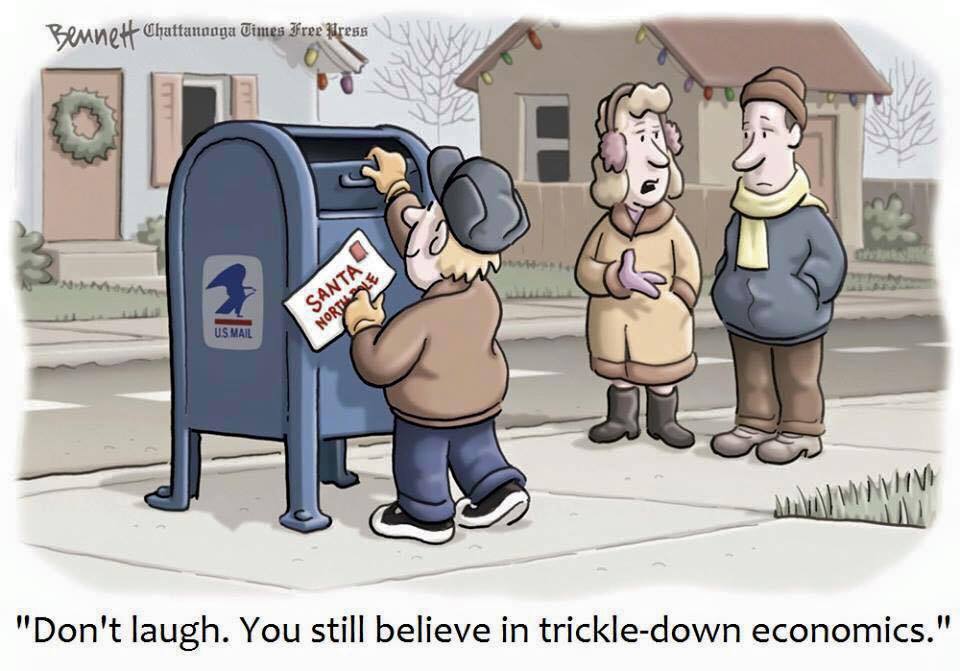
Merry OXmas

Merry OXmas everyone! 


Monday, June 1, 2015

Glaeser on Cities, Development, and Density

The NYU Stern Urbanization Project has been organizing a number of great seminars that cover interesting speakers at the intersection of urban planning and economics (Check their YouTube channel here). In December last year, they had Edward Glaeser talking about Cities, Development, and Density.


In case you want a more academic reference, much of Glaeser's presentation is present in his recent paper on 'the causes and consequences of urbanization in poorer countries'.

Sunday, April 20, 2014

Your Language structure affect how you act


Abstract
Languages differ widely in the ways they partition time. In this paper I test the hypothesis that languages that do not grammatically distinguish between present and future events (what linguists call weak-FTR languages) lead their speakers to take more future-oriented actions. First, I show how this prediction arises naturally when well-documented effects of language on cognition are merged with models of decision making over time. Then, I show that consistent with this hypothesis, speakers of weak-FTR languages save more, hold more retirement wealth, smoke less, are less likely to be obese, and enjoy better long-run health. This is true in every major region of the world and holds even when comparing only demographically similar individuals born and living in the same country. The evidence does not support the most obvious forms of common causation. I discuss implications of these findings for theories of intertemporal choice.